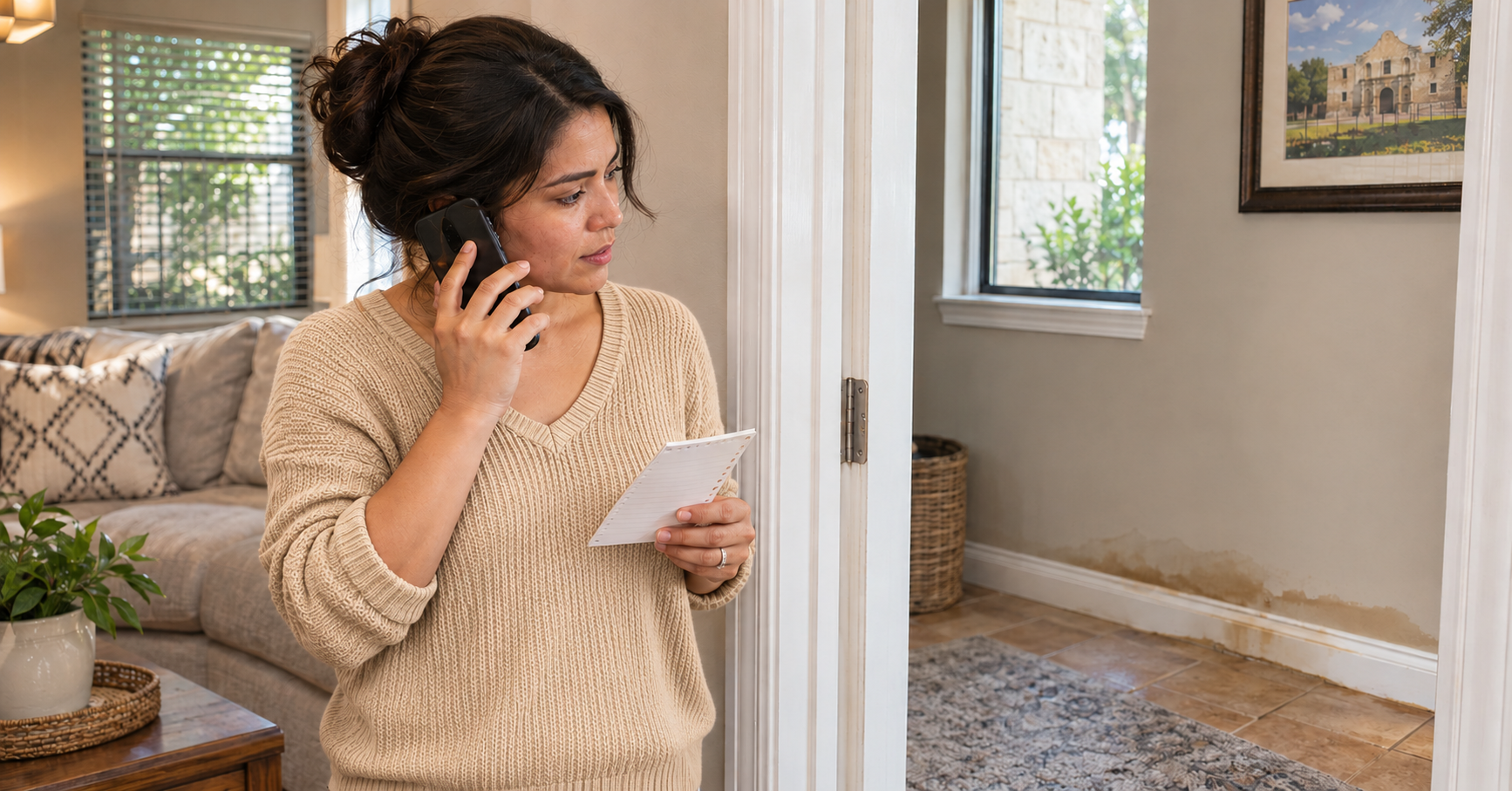
When water affects a room, it can be hard to know which detail matters first. The most useful first call starts with two things: keeping people away from a potentially unsafe area and describing what you know without guessing at what is hidden.
You do not need a perfect account of the damage. A few clear observations can help the person taking the call understand the situation, who is on site, and what should happen next.
Start with safety
If there is standing water near electrical equipment, a suspected sewage issue, or another immediate hazard, stay out of the affected area. Do not enter water to reach a breaker or use electrical equipment in a wet area. Follow the directions of local emergency or utility professionals when a hazard requires them. The CDC’s flooded-home guidance explains why electrical and contamination risks deserve caution.
From a safe location, you can still begin a useful conversation. Tell the person taking your call if the area cannot be entered safely. That is more valuable than risking entry to obtain a photograph or a measurement.
Share what you know, and say what you do not
The first caller should be ready to describe:
- When the water was first noticed. If the start time is unknown, say so.
- Where it is visible. Name the rooms, floors, and surfaces you can see from a safe place.
- Whether the source is known. A supply line, appliance, roof leak, or another source may be suspected, but do not present a guess as a confirmed cause.
- Whether the situation is changing. Say if water is still appearing or if the affected area seems to be growing.
- Who can provide access and make decisions. Share the best contact for the home or facility and any access limits.
Photos can help preserve a record when they can be taken safely. A wide view shows the room; closer views can show visible affected materials. Keep the original images and note when they were taken. Do not move damaged materials or enter an unsafe area just to improve the pictures.
Ask what the first assessment can clarify
An initial conversation should tell you how Aladdin will gather the facts needed to recommend a next step. Ask which areas can be assessed, what needs access, and what cannot yet be known about concealed moisture or affected materials. A responsible answer may include uncertainty until the property can be examined.
If you manage a business or shared property, add the practical details: who can open the building, which rooms are in use, who should receive updates, and whether access must be coordinated with tenants or staff. Aladdin’s commercial services page describes the broader facility-care work available when the immediate situation is understood.
Get help from Aladdin
Active water or fire damage? Call Aladdin at 210-736-1821. From a safe place, share when you noticed the problem, where it is visible, and who can provide access. See Aladdin’s water-damage restoration service for details.
Need non-urgent residential cleaning after the immediate issue is addressed? Submit the residential service request form. Aladdin asks customers to allow at least one business day for form processing and directs active water or fire damage to the phone instead.