Some rugs are part of the décor. Others are part of the family story. Either way, specialty rug care should begin with understanding—not assumptions.
A thoughtful process protects more than appearance. It considers the rug’s construction, dyes, foundation, fringe, condition and history before a care plan is chosen. It also gives you a clear explanation of what may improve, what may not and what happens next.
Here are the seven stages of Aladdin’s specialty rug-care process and why each one matters.
1. Intake Records the Rug and Your Concerns
Care begins with a conversation. The rug is identified, measured and documented, along with its visible condition and the concerns you want evaluated.
This is the time to share what you know: spills, pet accidents, household products, previous cleaning, storage history, repairs or areas of wear. If the rug has sentimental value or an important family history, say so. That context helps the care team understand what matters most to you.
Clear intake notes create a starting record and help prevent important details from being lost once the rug enters the facility.
2. Inspection Looks Beyond the Surface
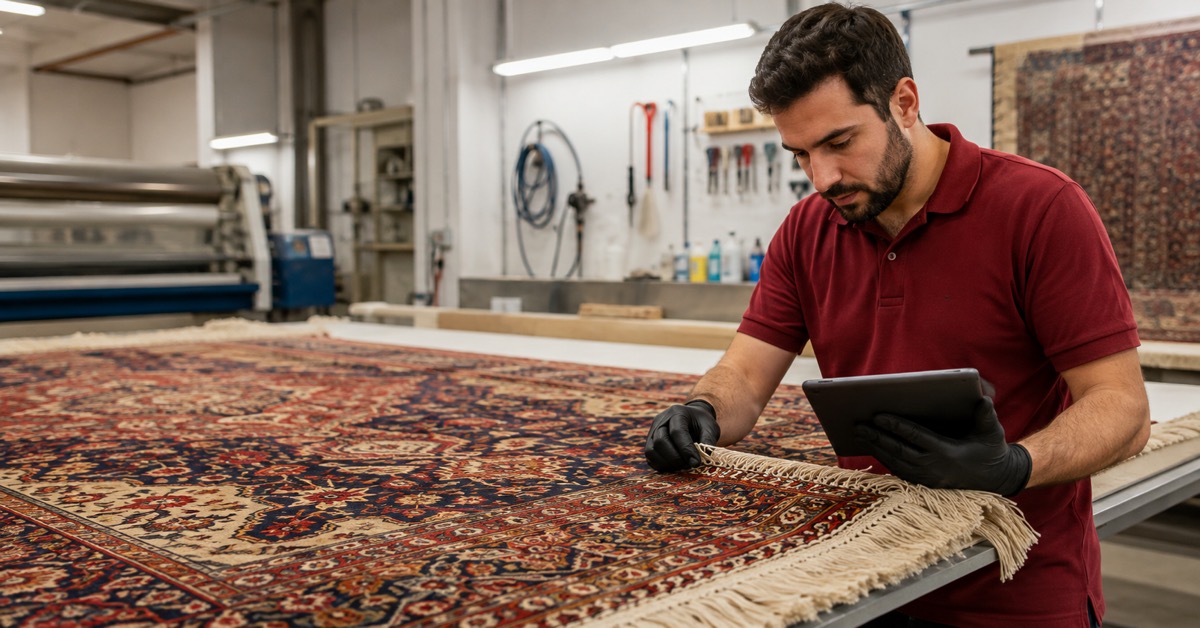
A rug can reveal more than a quick glance shows. Its fibers, dyes, foundation, fringe, construction, age and previous repairs can all influence what happens next.
The purpose of inspection is not to make care sound complicated. It is to avoid treating every rug as if it were the same. A handmade wool rug, a delicate heirloom and an everyday synthetic area rug may require different decisions, even when the visible concern looks similar.
Inspection also helps separate removable soil from wear, color loss, fiber damage or repair needs. That distinction supports a more honest conversation about likely results.
3. Testing Helps Shape the Care Plan
Before cleaning begins, the care team may evaluate how the rug’s dyes and materials are likely to respond to moisture and cleaning.
Testing adds information. It does not remove every unknown or guarantee a particular outcome, especially with older rugs, unstable dyes, previous repairs or products applied before the rug arrived. Its value is in helping the specialist choose an appropriate process and discuss realistic expectations before proceeding.
That is what professional expertise should provide: better judgment, clearly explained.
4. Dry-Soil Removal Comes Before Cleaning
Rugs can hold dry soil deep within the pile and foundation. Removing as much loose material as practical before introducing moisture helps keep that soil from becoming harder to remove during cleaning.
This stage may be less visible than washing, but it is not a shortcut or an extra. It is part of the preparation that supports the rest of the process.
5. Cleaning Follows the Rug’s Needs
The cleaning method should follow what the intake, inspection and testing revealed—not a one-size-fits-all routine.
Soil, spills, odors, wear and fiber damage are different conditions. Cleaning may improve some concerns, while others may require repair, a separate treatment or a different expectation. The rug’s construction and condition guide the care plan.
The goal is not to promise a miracle. It is to use experience, craftsmanship and a controlled process to care for the rug responsibly.
6. Controlled Drying Continues the Care
Cleaning is only part of the work. Moisture also has to be managed appropriately.
Controlled drying helps move the rug through this stage without leaving it wet longer than intended. The rug’s construction, density and condition still matter, which is why drying is part of the care plan rather than an afterthought.
7. Final Review Confirms What Was Completed
After cleaning and drying, the rug receives a final review. The care team checks its overall condition, grooms the pile and fringe as appropriate and confirms that it is ready for return.
If a condition remains visible or the process reveals a repair need, that should be communicated clearly. You should know what was completed, what the team observed and what care may be helpful after the rug returns home.
That final conversation is part of accountable service. Trust grows when the process and the result are both explained honestly.
What to Share Before Your Rug Is Evaluated
Useful information includes:
- What happened and when you first noticed it
- Products or treatments already used on the rug
- Pet accidents, odors or recurring spots
- Known repairs, damaged fringe or weak areas
- Previous professional cleaning
- Age, origin or family history, when known
- Any concern that matters more to you than appearance alone
You do not need to diagnose the rug yourself. Sharing its history helps the specialist ask better questions and make a more informed recommendation.
Start With a Rug Evaluation
If an area rug needs attention, start with a conversation. Aladdin can evaluate the rug, explain the options and help you understand what to expect before care begins.
Schedule online: https://aladdincleans.com/locations/schedule-online/
Call Aladdin: 210-361-3930